Recent-ish Reads, March 26, 2026
Many people are saying: understanding things process-relationally is transformative.

It's been almost a quarter since the last of these roundups and it's really hard to choose among the many amazing written pieces that have come out agreeing with me illustrating how transformative it is to understand the things that constitute reality as relational processes rather than as self-contained entities. These are the cream of the crop, though.
First, please just subscribe to Atmos in general because it's gorgeous and brilliant, but two recent pieces on fractals and natural morality are standouts of process-relational thinking. I can't pull quotes, they're just too lovely from top to bottom.
 Atmos
Atmos
 Atmos
Atmos
Next, in Knowable Magazine (from the estimable Annual Reviews), science writer KC Cole writes that "[t]he lessons of science are clear: While the things we think are fundamental might not be, the relationships between things fundamentally are." Ding ding ding!
https://knowablemagazine.org/content/article/society/2026/opinion-finding-good-in-the-natural-world
Psychology professors and bestselling authors Dominic Packer and Jay Van Bavel discuss "the Olympic paradox," where international solidarity and nationalist competition coexist. "[C]ompetition is paradoxically very often a fundamentally cooperative act. ... However hard they battle, competitors agree to abide by a shared and mutually agreed-upon set of rules." With the right rules and norms, "[g]roup identity does not always lead to prejudice and discrimination, dislike, and disregard--indeed, the assumption that these are inevitable outcomes is one of the most prominent myths about identity. Rather, the norms we create and embody determine how we treat members of other groups." When those norms are grounded in pluralistic, process-relational reality, competition can be steered toward the greater good.
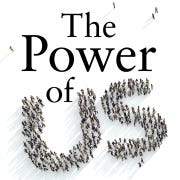 Dominic Packer & Jay Van Bavel
Last, for the real philosophy-heads, just trust me:
 Jo Bervoets