Recent-ish Reads, January 5, 2026
Basic comparative metaphysics continues to pop up and show its usefulness everywhere.

Welcome to How To Get Things Less Wrong's first process-relational reading roundup of the new-ish year! As always, it explores some highlights of practical comparative metaphysics in action, showing how those foundational frameworks for what things are are ubiquitous, important, and actually pretty easy to update.
First, a really on-point piece about the psychological benefits of understanding existence process-relationally. It even name-checks Heraclitus and Whitehead. For a deeper dive on similar themes, check out a more academic article from 2020 that has been central to my own thinking, "From nouns to verbs: How process ontologies enhance our understanding of social-ecological systems understood as complex adaptive systems." It's one of the clearest explanations I've ever encountered of the difference between substance and process metaphysics, how they show up in everyday thinking as well as research, policy, and culture, and how to start operationalizing process-relational thinking and practice.


Also in the realm of psychology, a research review article highlights the problems that arise from chasing view-from-nowhere "objectivity" and the benefits gained from including diverse, embedded perspectives to ground-truth our maps.
 Kelly McFadden
Next, two of my favorite political epistemologists, David Roberts and Samuel Bagg, in conversation about how limited humans (even "rationalists") are as cognitive agents, how much social identity shapes our perception and predictive processing, the necessity of collective social structures calibrated to correct for individual limitations through breadth, diversity, and processes, and the vast problems that spiral when people don't trust those structures and processes. They also chat about ways to be more epistemically successful (i.e., less wrong) by trusting the right people in the right contexts and applying discerning judgment in the face of uncertainty. All in all, it's a conversation that supports aspects of this map-territory frame that bridge to identity: the presence of process-relational thinking in all minds and cultures, its compatibility with most existing religious and secular worldviews, its trending success, its anti-elite cool, its moral clarity, its necessity for art and meaning, and so on. There's a very readable transcript if you're like me and prefer reading to listening.
 David Roberts
Relatedly, there's not a lot of daylight between process-relationality as a metaphysical framework and solidarity as a political commitment, and Hamilton Nolan has a great piece on the benefits of the latter to transcend and bridge across religious and non-religious beliefs in a democracy.
 Hamilton Nolan
On the flip side, there's not a lot of daylight between map-metaphysics' deterministic and essentialist individualism, evangelical prosperity gospel bullshit, and MAGA fascism by way of Project 2025, as laid out in a detailed historical review by political strategist Matt Royer. I think it's worth a longer quote, with a couple bracketed comments:
Though Donald Trump initially attempted to distance himself from Project 2025 during the campaign, the document ultimately appealed to him because it articulated the society he has always envisioned. In this world, power is autocratic and centralized, ordered around insular family dynasties overwhelmingly led by white men. Oversight [system feedback from diverse perspectives] is minimal or nonexistent. ... Social obligation disappears. People do not owe one another anything.
These tenets are not merely political preferences—they are the direct inheritance of prosperity theology. They flow from a belief system that treats wealth as moral proof, poverty as personal failure, and hierarchy as divinely ordained. What we are witnessing now is the exertion of political power steeped in that [metaphysical] dogma, made flesh through policy and governance.
And Americans are suffering for it.
The more clearly we understand the ideological architecture we are up against—not just a party or a candidate, but a decades-long fusion of theology, media, money, and power—the more obvious it becomes that incremental responses will not suffice. ... It must be confronted at the level of values, story, and moral clarity.
 Matt Royer
Here's a quick and lovely meditation on learning from, and not just about, the more-than-human world.
 Atmos
Atmos
This one wasn't published particularly recently, but came to my attention through end-of-year lists. (Anyone else love end-of-year list season as much as I do?) Below is an interview with an author of a book that has been on some such lists, which touches on the goofy map-metaphysics embraced by AI billionaires and their bootlickers.
 Justin Hendrix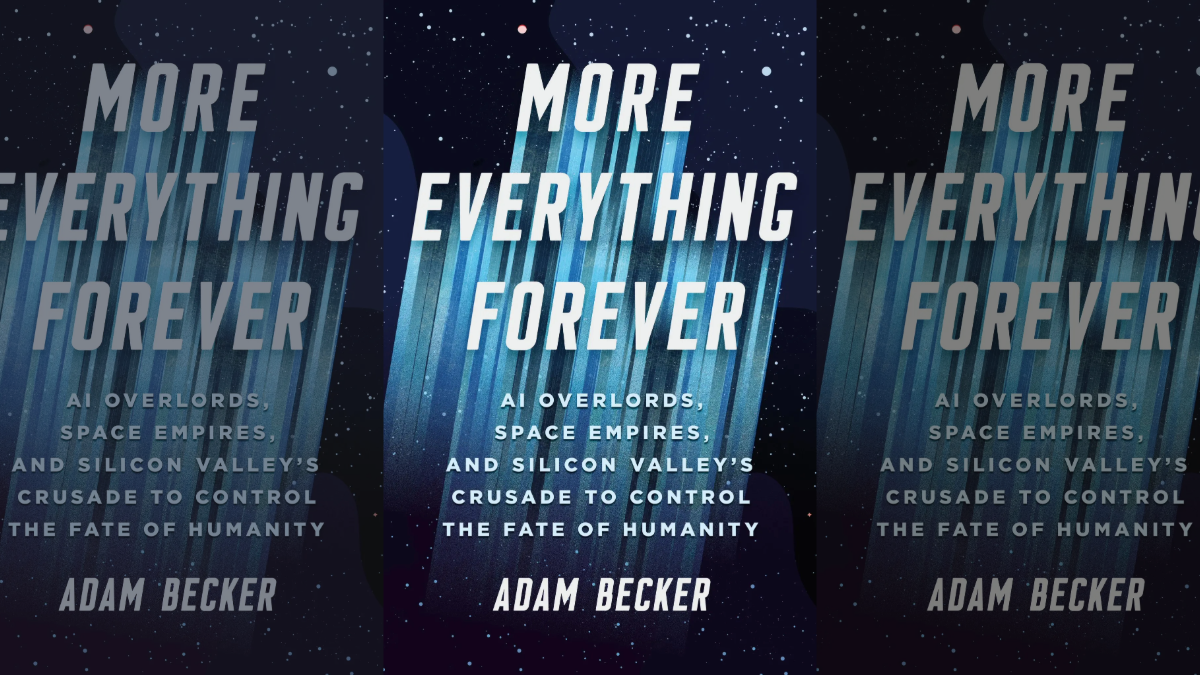
Finally, process-relationality often shows up in the better, more wisdom-oriented self-help advice. Timely case in point, this philosophy-based take on resolutions.
 Jack Maden
Have you seen any process-relationality out in the wild lately?