Recent-ish Reads, December 17, 2025
More real-world examples of basic comparative metaphysics and map vs territory in action.

Every recent-ish reads roundup here on How To Get Things Less Wrong shares real-world examples of basic comparative metaphysics in action, though never named as such. Each example makes plain the benefits of distinguishing Euro-Western culture's dominant, separating and essentializing map from the interdependent, process-relational territory of empirical reality. This simple principle facilitates deeper, broader, less-wrong engagement with diverse and complex issues across the board. (I haven't done one in a while so this one is pretty packed. If you only read one from today's roundup, try the first or last on the list.)
Let's start with the most directly on-point pop-science writing on process-relational metaphysics that I've seen lately, although it was published back in July. It checks a lot of boxes: situating process-relationality as transcending tired binary fights between physicalism and idealism, mentioning Alfred North Whitehead and non-Western cultures' philosophies, pushing back against machine metaphors for the world, and beautifully explaining enactive cognition and the lessons of quantum mechanics.
 Adam Frank
Noema also features a thorough dismantling of "rationalist" and "effective altruist" bullshit and its deliberate obfuscation of its thoroughly political nature. "[S]uperintelligence discourse ... was shaped within institutions committed to rationalism over empiricism, where individual genius was fetishized over collective judgment, and technological determinism was prioritized over social context." Read it if you're an AI skeptic, and definitely read it if you're not.
 James O’Sullivan
Some other recent, at least partially process-relational articles to check out in Noema include "Inside Bioregionalism's Tech-Driven Revival," touching on the abstracting social construction of borders, and "The Moral Authority Of Animals," about how non-human animals can offer humans vital lessons for ethics, political wisdom and social health. Sometimes this publication gets a bit techno-utopian and map-metaphysics-y, in a way that Atmos (below) generally doesn't, but when it's good, it's very very good.
The prestigious magazine Science recently published an interesting article on where interpretations of quantum mechanics stand these days. It takes as its launching point a convening of physicists this year on the island of Helgoland to commemorate quantum theory's centennial. While the article, which interviews Carlo Rovelli among others, is an interesting read, I do quibble with the framing that relational quantum mechanics "puts physicists at the center" of redefining reality. That's a conclusion you can sort of only get by viewing process-relational reality from a perspective stuck inside hierarchical map-metaphysics. (It's also bold of the article author to imply that Eastern philosophy is outside the bounds of "orthodox intuitions," as if Euro-Western thought defines human intuition. I note that Indigenous engagement with quantum physics is also absent from the article, an unfortunate omission.) It's not that human consciousness creates reality; it's that everything co-creates reality. I was pleased to read that support for interpretations like Rovelli's is growing, particularly among younger researchers, even as some try to retain the illusion of an "objective" view-from-nowhere and an absolute separation of observed from observer.
https://www.science.org/content/article/100-years-quantum-mechanics-redefining-reality-us-center
I've previously stated my enthusiasm for Annual Reviews, and the recently published 56th volume of the Annual Review of Ecology, Evolution, and Systematics hits on a lot of my favorite themes. Though it has a dry title, the lead article, "The Evolutionary Ecology of Species Interactions: Shared Mechanisms of Natural Selection and Population Regulation" is pretty readable, especially the Introduction. It details how reductionist accounts of evolutionary and ecological theory that over-emphasize competition at the expense of other forms of interaction and interdependence, and that stay in their respective domain silos, can't explain the world well until they're integrated into more process-relational approaches.
https://www.annualreviews.org/content/journals/10.1146/annurev-ecolsys-102723-044137
Next, a book review. I must admit upfront that its subject is a book I haven't read, and so can't yet vouch for personally. The review itself, though, was thorough and fascinating in its own right. James Gimian and Gabrielle Donnelly's piece in the Journal of Awareness-Based Systems Change on Everyday Habits for Transforming Systems: The Catalytic Power of Radical Engagement by Adam Kahane further distills the book's distilled, crowd-sourced wisdom. "The 7 habits, while the star of the show, are importantly supported throughout the book by the connective tissue of Adam's underlying view from which these practices can arise. Chief among this is what he calls 'radical engagement,' the deeply relational orientation that conveys the central role that the interconnectedness of things, or 'all my relations,' has to this work. ... Another equally important theme is that each of us have the seeds of these practices already within us, thereby undercutting the dualistic struggle, as if we were trying to annex foreign territory and integrate it into our dominant culture."
https://jabsc.org/index.php/jabsc/article/view/11323/9480
The New Republic gives us a thorough, unsparing look at one of the world's most evil and degenerate examples of what can go wrong when your worldview is static, essentialist, hierarchical, and zero-sum, when it's obsessed with numbers and borders and appearances and purity and top-down control—especially when it comes to defining peoples and nations. Shadow President Stephen Miller sees pluralism and the Other as existential threats to "civilization"; of course, it's really him and his crew who are unraveling everything that holds things together. Even Euro-Western civilization is far more dynamic and relational than he credits. Though his goalposts may shift in order to preserve his volkish map-metaphysics, his insistence on hierarchical mattering and un-mattering is constant, and constantly false. Also worth checking out: Thomas Zimmer on how "Trumpism Is at War with the Idea of a Citizenry of Equals."
 Greg Sargent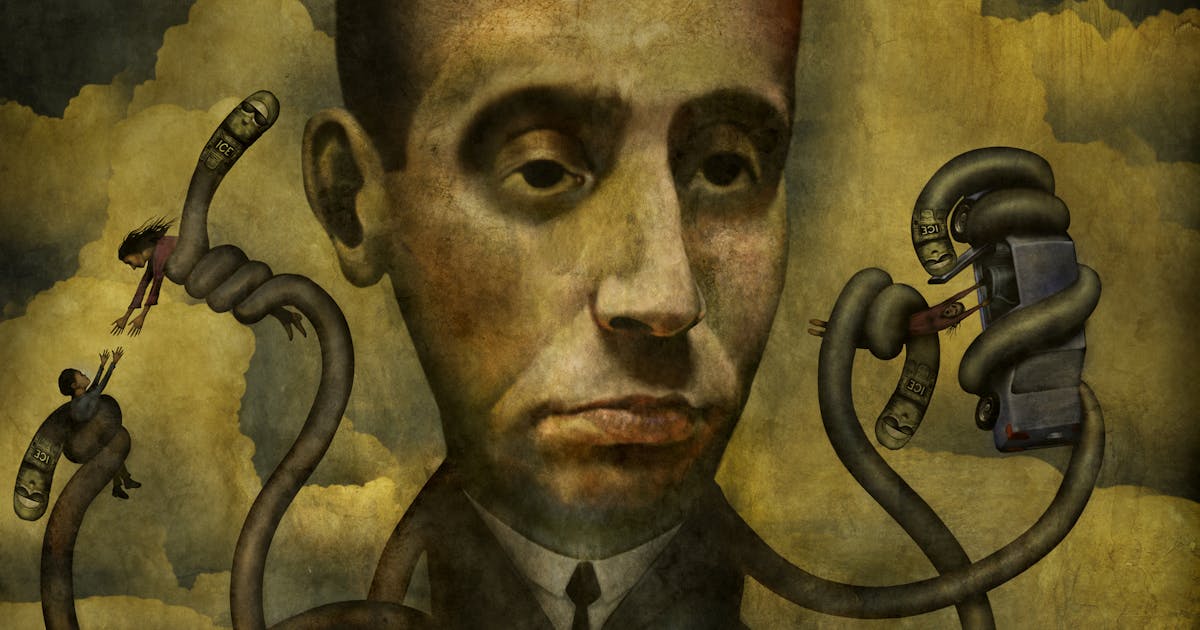
Speaking of Euro-Western civilization being more dynamic and relational than white nationalists admit, Liberal Currents makes a good point. "Western culture has hundreds of stories about the conquerors. We have a handful of usually younger stories about securing better treatment for the oppressed. Still, and once again—they were all our ancestors. When you say that you’ve inherited a triumph, you’re cherry picking. Your ancestors were always on both sides, my friend. Tell the stories of how we won our freedom from outsiders. But also tell the stories of how we freed some of us from the rest of us."
 Jason Kuznicki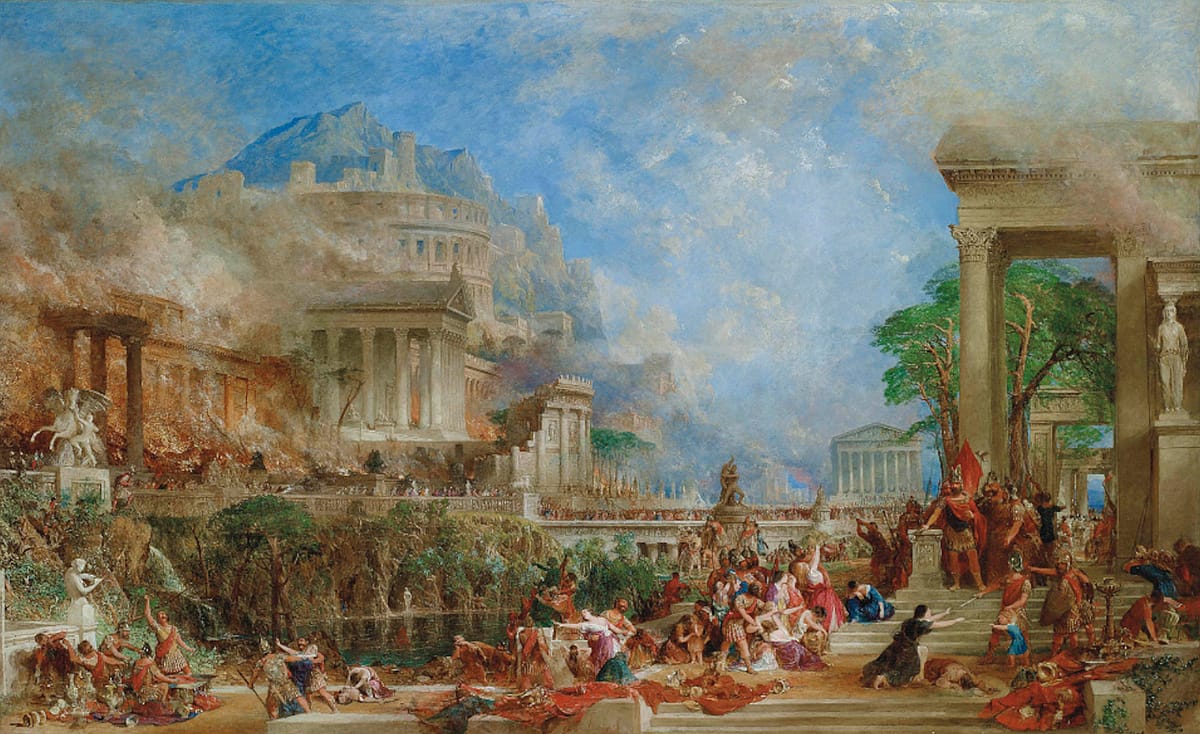
Coming in right under the wire, labor journalist Hamilton Nolan had a good rant yesterday against "[t]he grotesqueness of billions of dollars, the brute force of that tidal wave of capital, its ability to force a price upon things that are priceless." Nolan condemns, not incorrectly, "the one, big problem at the center of [the overwhelming daily procession of political outrages]: The fact that too few people have been allowed to have too much money." But beneath this is the load-bearing cultural dominance of map-metaphysics assumptions of separateness, idealism, hierarchical mattering, determinism, and the reducibility and commensurability of all value down to universal, quantifiable currency measures.
 Hamilton Nolan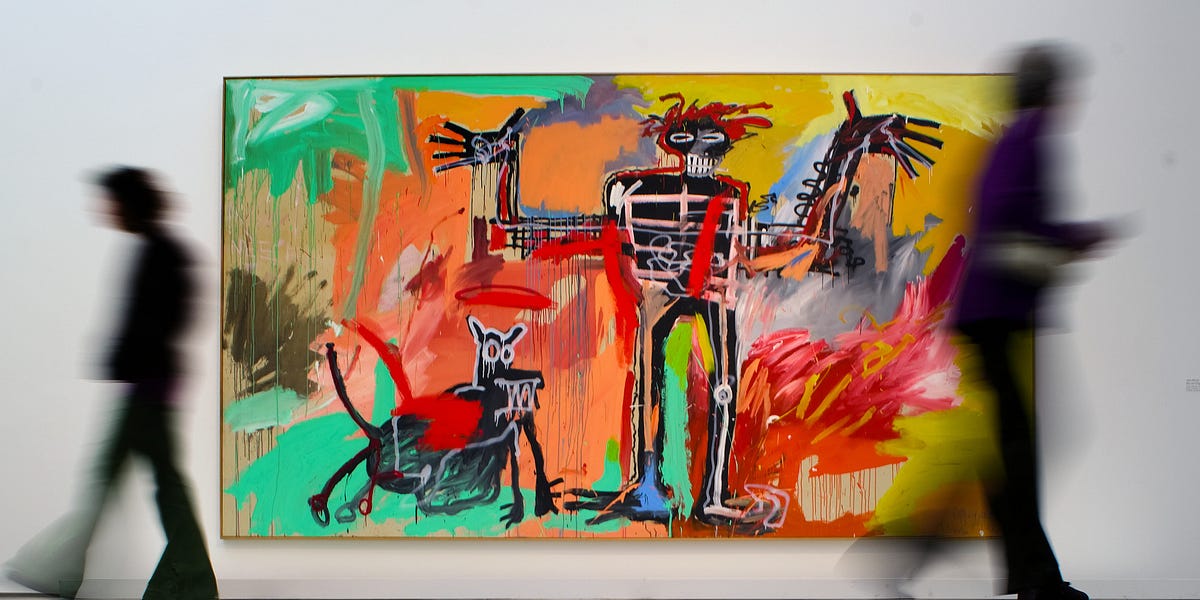
Last but not least, in Atmos, the fabulous Baratunde Thurston uses the Declaration of Independence's 250th anniversary next year as a launching point for an engaging dive into the Haudenosaunee Confederacy and its Great Law of Peace, Kaianere’kó:wa. Just trust me on this one: it's 100% worth your time. Most Atmos stuff is, really, just some of the best process-relational reality-grounded writing and art being made in this moment.
 Atmos
Atmos
P.S. I'm also about a quarter of the way through the recently published open-access book Seeing Like a Platform: An Inquiry into the Condition of Digital Modernity by Petter Törnberg and Justus Uitermark. It's excellent so far; stay tuned for a future review. I know I've missed some good stuff, if you have any other suggestions please drop them in the comments!